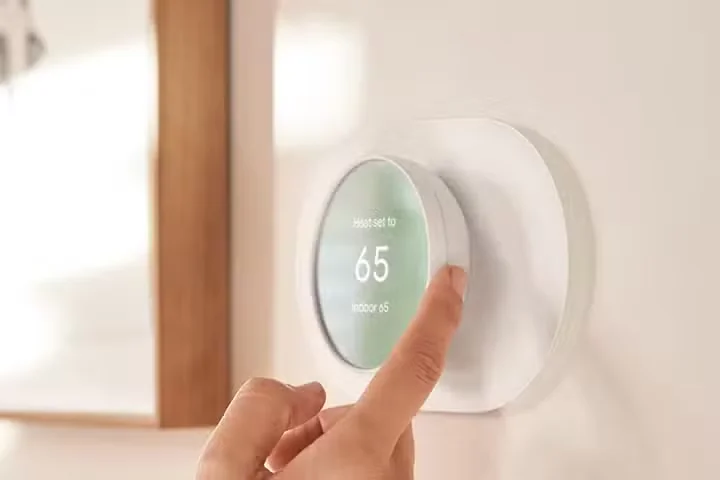
The smart thermostat bestseller list on Amazon has long been dominated by a device that is not Nest, not Ecobee, and not especially loved — a budget unit that does the job while its buyers quietly assume they are overpaying for a feature set nobody uses. At $79, the price finally matches what the thermostat actually is, and that changes the recommendation calculus entirely.
What the category's premium models charge for is learning schedules, remote room sensors, and deep integration with assistant ecosystems. The bestseller strips those ambitions and keeps the mechanics that matter: precise temperature control, reliable Wi-Fi scheduling, geofencing that mostly works, and app control from anywhere. For the majority of households, the difference between a $79 thermostat and a $280 thermostat is measured in convenience features used once and then ignored.
The caveats are the usual budget-device tax. Compatibility with heat pumps, high-voltage systems, and no-C-wire configurations varies by model, and a missing C wire means an adapter or a professional visit that erases the savings. App quality, update cadence, and long-term cloud support are the weak points where cheap brands disappoint, and privacy-conscious buyers should check whether automation survives an internet outage.
Still, this is the most rational smart-home purchase available right now. A thermostat is the only automation that pays for itself through energy savings, and at $79 the break-even arrives in a single season of sensible scheduling. The premium models remain worth it for households that will use what they sell; everyone else just got permission to stop pretending.