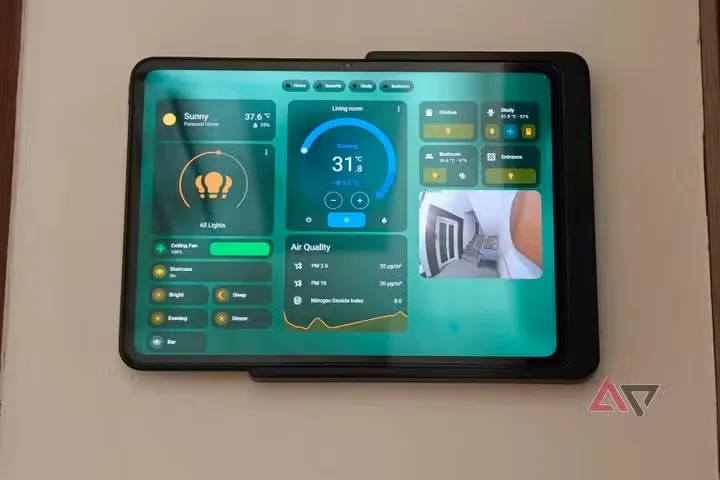
Smart home apps were meant to simplify life, but after enough brands enter the mix, control turns into a scavenger hunt across five or six interfaces. One enthusiast decided to end the fragmentation by building a custom dashboard in Home Assistant, the open-source automation platform, and now runs the entire house from a single screen with one tap. Lights, climate, media, security modes, and daily routines all respond from a unified interface that replaced a cluttered collection of vendor apps entirely.
The appeal of Home Assistant in scenarios like this is its local-first architecture. Because automations execute on a home server rather than in a manufacturer's cloud, the dashboard reacts quickly, keeps working when the internet goes down, and does not depend on any single company's continued support for a device. The trade-off is a meaningful learning curve: configuring integrations, designing cards, and maintaining the software demands more effort than downloading an app, and casual users may find the initial setup intimidating.
Still, the results speak to why the platform's community keeps growing. A well-designed dashboard can encode a household's actual behavior — a goodnight sequence that locks doors, dims lights, and arms cameras in one press — far better than the rigid routines vendor apps allow. For anyone whose smart home has outgrown its stock interfaces, the project is worth copying in spirit: consolidate first, customize second, and let the physical switches and phone apps fade into a backup role.