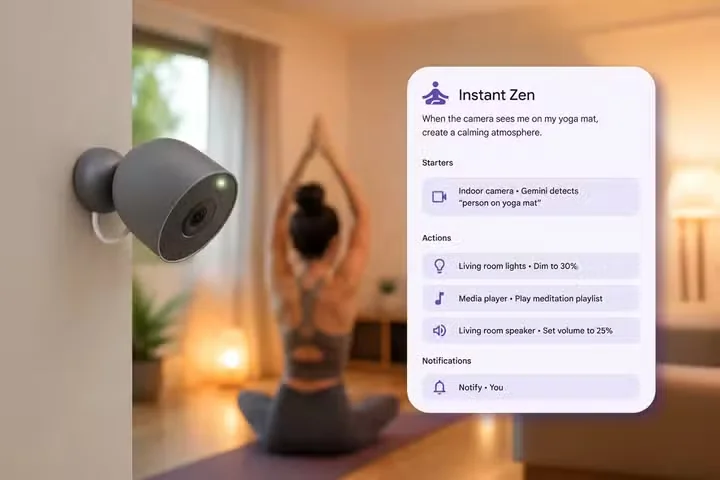
Google Home's cameras have picked up an ability that changes what a security camera is for: the system now interprets scenes well enough to know what is actually happening, rather than simply detecting that something moved. Instead of alerting to every branch and pair of headlights, the updated intelligence categorizes events with the fluency of a human glancing at a feed — and the same models that make it genuinely useful also make some users quietly uneasy.
The practical upside is real and immediate. Camera notification fatigue is the single biggest reason people disable their home security systems; when every alert is meaningless, the whole product becomes noise. Context-aware detection restores value by surfacing only events that matter — a person at the door, a car in the driveway, a pet tracking a squirrel across the yard — and by enabling automations that respond to actual situations rather than raw motion. For households that abandoned their subscriptions in frustration, this is the feature that might bring them back.
The honest caveat is what the intelligence requires. Scene understanding works best when frames are processed by increasingly capable models, and the line between on-device analysis and cloud inference is blurrier than most marketing suggests. Users who care should read which features run locally, which upload imagery, and how retention works before enabling everything at once. Smarter is not automatically better — but for the first time, Google's cameras are smart enough to justify the trust their owners have to place in them.