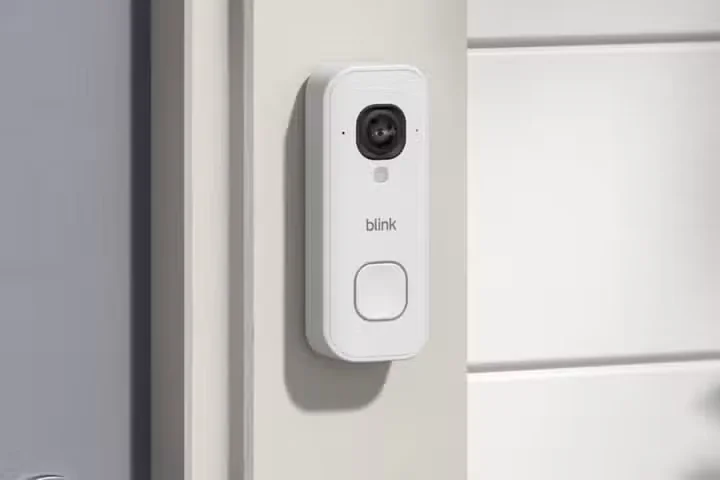
Security camera marketing usually trades in one of two currencies: more pixels or a lower price. Blink's newest video doorbells break the pattern by doing the first without touching the second, raising resolution while holding the line on the affordability that made the brand the default budget pick in the category. For a company that built its reputation on battery-powered simplicity and an ecosystem that runs for months on ordinary lithium AA cells, the upgrade is a pointed answer to competitors who assume customers will pay more for clarity.
The practical effect of higher resolution is easy to underestimate until you need it. Face recognition at a doorstep, license plates in a dim driveway, and readable package labels all scale with pixel density, and sharper sensors narrow the gap between the budget tier and premium doorbells that cost two or three times as much. Blink pairs the hardware refresh with its usual software stack — live view, motion zones, two-way audio, and cloud clips — so existing users can drop the new unit into an existing Sync Module setup without rebuilding routines or re-learning an app. The price hold also keeps multi-camera bundles, a Blink staple, genuinely cheap.
Buyers should still read the fine print. Blink's feature set leans on its subscription for full history and rich notifications, the company has been migrating users toward a newer app generation, and resolution claims rarely account for how compression degrades night footage. Battery-first design also means the doorbell cannot match wired units for continuous recording. Even so, increasing resolution without increasing price is the rare hardware update that simply makes the value equation better. For renters, homeowners on a budget, or anyone outfitting a second property, the new Blink doorbells make the case that sharp security video no longer requires a premium.