My router had become the weakest link in my smart home, and for months I could not prove it. Every evening, somewhere between the thermostat report and the first camera motion event, the whole network would stutter, drop a few devices, and recover after a reboot I had learned to perform without thinking. I tried channels, extenders, QoS settings, and a new access point. The real problem was simpler: dozens of Wi-Fi gadgets were crowding a consumer radio with chatty, always-on connections it was never designed to serve. The fix was moving the entire smart home off Wi-Fi and onto thread.
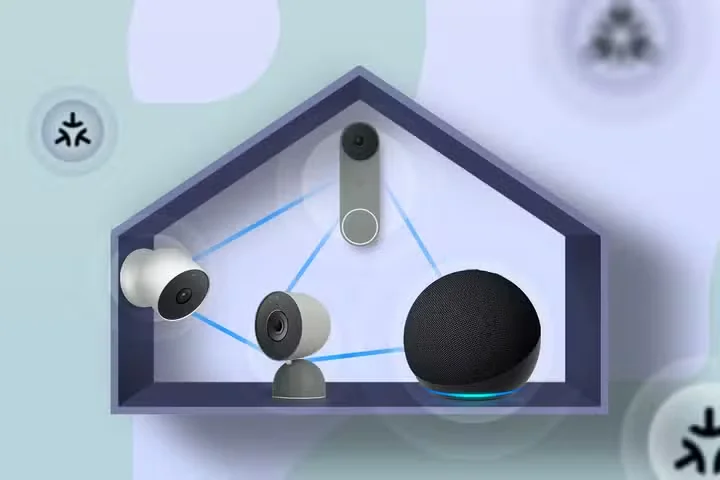
Thread is a low-power mesh networking protocol, and its architecture inverts the Wi-Fi model in exactly the ways a smart home needs. Devices do not each maintain a power-hungry link to a single router; they form a self-healing mesh where every mains-powered node relays traffic for its neighbors, so a bulb that dies simply reroutes around the gap. The radio load that was crashing my router vanished, because Thread speaks on its own 802.15.4 channel instead of fighting the laptop and phone for Wi-Fi airtime. Border routers — the bridges between Thread and the normal network — are built into devices I already owned, including modern Nest hubs and HomePods, so the migration required no new box on the shelf.
The transition was not painless. Older Wi-Fi-only gadgets cannot join a Thread network, so the move is really a replacement schedule spread over months, and commissioning failures are more opaque than typing a password. Pairing behavior also differs between ecosystems, and matter, the application layer Thread usually carries, still has rough edges around multi-admin setups. But the router stopped crashing the day the last sensor migrated. For anyone whose smart home has outgrown its network, Thread is no longer the protocol of the future — it is the fix available today.