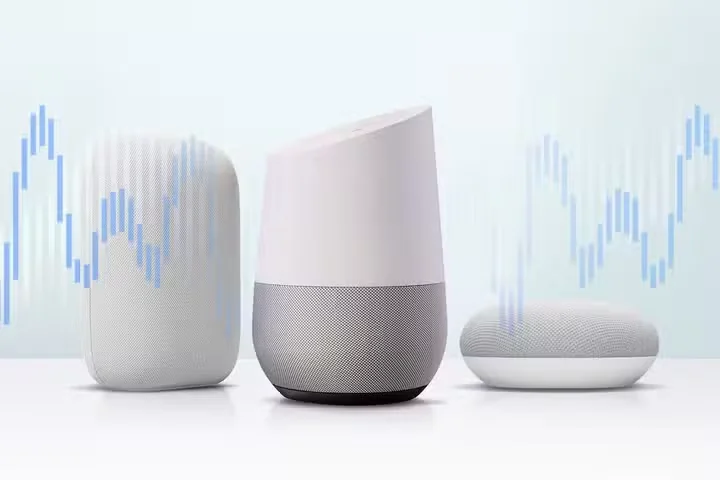
There is a particular kind of smart home heresy that surfaces in long-time user forums: the claim that the original Google Home, the first-generation speaker from 2016, still sounds better than the Nest Audio that replaced it. I have now lived with both devices side by side long enough to say it out loud — my decade-old speaker has the more satisfying audio, and I am not entirely sure the upgrade was the improvement Google's marketing promised.
The difference is easiest to hear on the frequencies that matter for a home speaker. The original Google Home, tuned with a passive radiator and a full-range driver behind a fabric-wrapped cylinder, produces a warmer, fuller midrange that makes podcasts, radio, and classic rock feel present in the room. The Nest Audio, by contrast, is leaner and more analytical: it is genuinely better at stereo pairing, and its beamforming microphones hear commands across a louder kitchen, but as a single unit on a shelf it can sound thin, with treble that hardens on vocal-heavy tracks. Volume behavior differs too — the older speaker keeps its composure at high levels where the newer one starts to compress.
Two honest caveats keep this from being a simple verdict. First, aging hardware can flatter memory; I may be hearing nostalgia as much as frequency response, and a blind test could embarrass me. Second, Google has moved on: the first-generation speaker's Assistant support is already winding down, its software is largely frozen, and its microphone far field is genuinely worse, which matters for anyone who talks to a speaker more than they listen to one. The real lesson is not that Google made a worse product — on paper the Nest Audio is better in almost every measurable way — but that tuning choices are values, and the company traded warmth for features that longtime fans never asked to lose.