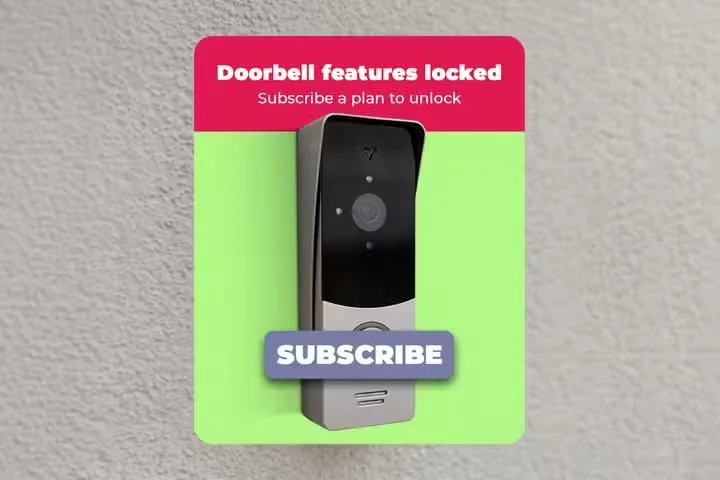
A smart doorbell that cost two hundred dollars to buy has arrived at the point where the software to actually use it must now be rented, and the experience captures everything wrong with the modern subscription economy bleeding into hardware you own outright. The complaint is not theoretical: the doorbell works, the camera works, the chime works, but the companion app gates core functionality behind a recurring fee, which means the device on the front door is only fully yours for as long as the billing relationship continues.
This pattern has become standard across the smart-home category. Doorbells and cameras from major manufacturers lock cloud recording, person detection, and sometimes even basic live view behind plans that range from a few dollars a month to double-digit fees per device, fees that quietly outpace the original purchase price within a couple of years. The manufacturers defend the model as the cost of running servers, pushing updates, and maintaining features. There is truth in that; video storage is genuinely expensive. But the same companies sell the hardware as a one-time purchase, and the line between a service and a ransom for functionality you already paid for has become uncomfortably thin.
For shoppers, the lesson is to price the device as a subscription product from the start. Before buying any camera or doorbell, add up the required plan over three years and compare it against hardware that stores footage locally on a card or a hub, even if the sticker price looks higher. Check whether live view and two-way talk survive without a plan, because those should never be premium features. And read the fine print on what happens to recorded history when a subscription lapses. The right answer is not to avoid connected doorbells; it is to stop letting the business model surprise you after the install is complete.