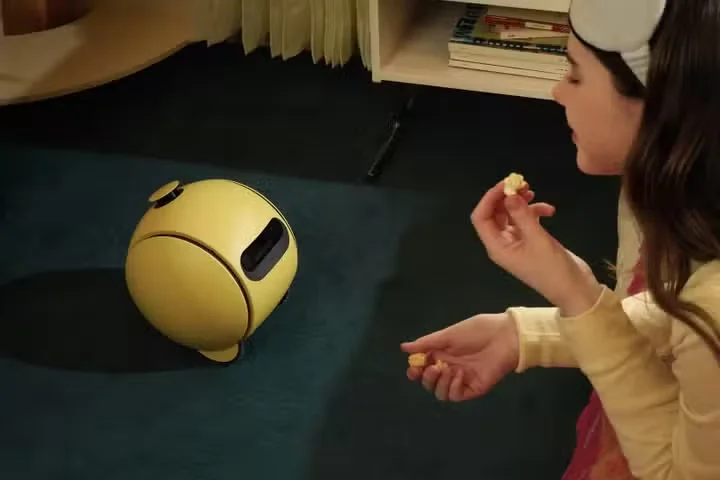
Samsung's Ballie, the golf-ball-shaped AI robot companion the company unveiled with enormous fanfare at CES, has pulled a vanishing act, sliding from keynote centerpiece to a product that Samsung no longer talks about, ships to consumers, or clearly intends to launch. The disappearance is a case study in how quickly the smart-home industry's most hyped concepts can evaporate when the engineering, the business case, or the strategy behind them fails to materialize.
The original vision was genuinely appealing. Ballie was pitched as the mobile brain of the smart home: a rolling projector that could walk from room to room, display content on any wall, monitor the house through its cameras, control Samsung's appliance fleet, and act as a pet and family companion powered by the company's AI stack. It appeared at CES multiple times, each showing promising new capabilities and each revealing that a consumer price and date remained stubbornly absent. The robot that was supposed to make the smart home feel alive kept living exclusively on stage.
Samsung's silence now reads as a pivot rather than a delay. The company has poured its consumer AI energy into the Galaxy ecosystem and into embedding assistants directly in televisions, appliances, and phones, where the hardware economics already work. A dedicated robot is a different business entirely: expensive, uncertain, and dependent on the kind of ambient AI that has proven harder to ship than to demo. Ballie's fate should temper enthusiasm for every keynote robot still in the demo phase. The distance between a working prototype and a product you can buy is where most of these projects die, and when a company stops talking about its own flagship concept, that silence is usually the answer.